Sunday, 19 June 2016

Inspiration and a confession - the jot-wall

Just having a think about my sources of inspiration (as someone has asked me recently).....hmmm, where to start? Inspiration for me, I realise,  is more or less everywhere. There is no shortage of ideas, there is always a shortage of time!

An artist friend of mine and I had a hilarious five minutes drawing a mental cartoon of all the ideas that are stacked up in our heads. We saw them all forming a long queue - one that swings from orderly to disorderly to rioting, attention-seeking misery! Think about the idea which has been there the longest and keeps getting parked - "what about me?", it wails, "you promised you'd action me in 1992!". We placate them all and promise them liberation in the murky future. 

Here are three tiny(5x7cm) monotypes waiting patiently to get turned into paintings 


Laughter aside it did make me think. How do I prioritise ideas? Are there recurring themes to discover? (yes, more later) I don't over-analyze what I do, but there are questions that I ask myself all the time:
does it work? if not why not?
what did I learn? 
what don't I like?
what do I like?
where is this leading me?
what do I want to keep?
what shall I drop?
what is doing this?
what do I want to pursue?
why did I do that?
what has ruined it?
is this a happy accident?
what shall I do next?
what shall I do different?
what can I try next?
can I be patient enough to get through this period of nothing happening until something sparks off again?
nah, shall we just let this one go?
what do I need to get better at?

It's not a pedantic list, more an instinctive mind scan......and in my head is a lattice-like, interconnecting grid of all of my ideas. Some are shinier than others (Is this a mind palace?  -  Sherlock?)

It's non-stop really ....so maybe I do over-analyze after all! But it has given me an insight as to why, CONFESSION......... I rarely use a sketch-book. (A tremblingly terrible confession for an artist; it's tantamount to saying out loud that you are not a real artist and can never be taken seriously) Even at art school I didn't, I had to make one up to get through the end of year critiques. It didn't come naturally AT ALL, because my sketch book is in my head. And I don't really like working in books. There, I've said it. 

In my studio you will see the occasional scrap of paper pinned to a wall documenting an idea that I don't want to forget, but it is more likely to be in written form than in drawing form. It's more like a jot-wall, which suits me better.  Here is the current state of my jot-wall.


I have looked on in envy at amazing sketch-books, tried my best to start them at various times - it never works. But I don't rule it out. I have only just become interested in gardening, - who knew! -  so I may well take to working in sketch-books sometime in the future too!

I have recurring themes, it's true.  But somehow, these are private, perhaps the viewer's to discern. Perhaps best not written about after all. 


Sunday, 12 June 2016

I love the sound of cutting glass


Its a unique sound as you pull the tungsten carbide wheel over the glass..... you can hear the molecules re-arranging themselves (well, that's what it sounds like to me) as they all line up ready to break apart with the slightest encouragement. How does it work? I know the science behind it, but it still is a pretty mysterious thing to witness.

Recently I have been working on a large mosaic commission made entirely of glass. It has been a great experience. I have become much more intrigued with glass as a medium. 


Here is the start of one of the panels. 

Like most art forms once you delve into it there is a wealth of history, skill, tradition and innovation attached to it. 


I have always wanted to learn stained glass techniques. When I do I will let you know! Here is the Matisse's work in Chapelle du Rosaire de Vence, so simple, so beautiful.


And here is John Piper's work at Coventry Cathedral


There is something so awe-inspiring about light coming through glass. Religious or not, I suspect it affects everyone in a similar way - perhaps tapping into the age-old thrill of seeing a rainbow? (still gets me every time).

I have just been practicing cutting curved lines and will definitely incorporate some hand cut glass into my next mosaic project.

Here is a great short video on how to cut glass


how to cut glass


Wednesday, 30 March 2016

Abstract Notepads

I have been working on a series of abstract paintings. In a way they are notepads for further work. I have tried to summon the colours and textures of experiences and convey them through these acrylic paintings on board.


They are a kind of visual diary, notes on the theme of.....I think it will be very interesting to pursue one of these themes in more detail. Painting on board has a distinctive quality, I am keeping these flat, graphic in nature. I found interestingly that I have slowed down and become quite contemplative painting these.

Wednesday, 24 February 2016

Winter Trees and short film of David Hockney

In spite of the strange seasonal weather - (our cherry tree blossomed early February!) - the winter trees have been very beautiful.

Here is a selection of my small studies of winter trees they are part of collection which I hope to exhibit in April.......and below that a link to a great short film of David Hockney painting trees in winter 2012

I never tire of looking at trees!


Short film of David Hockney painting winter trees 

Sunday, 7 February 2016

Monotypes - a magical mix of planning and spontaneity

I am about to embark on a series of monotype prints for my exhibition. I love this medium. I use Rhenalon plates and caligo safewash inks or Akua Speedball inks - they give differing effects depending on how you apply them and the paper you use - t here is a lot of experimentation needed.
I enjoy mixing inks on the roller, wiping ink away and scratching into the ink on the plate. With careful registration you can build up layers too. Here is an example

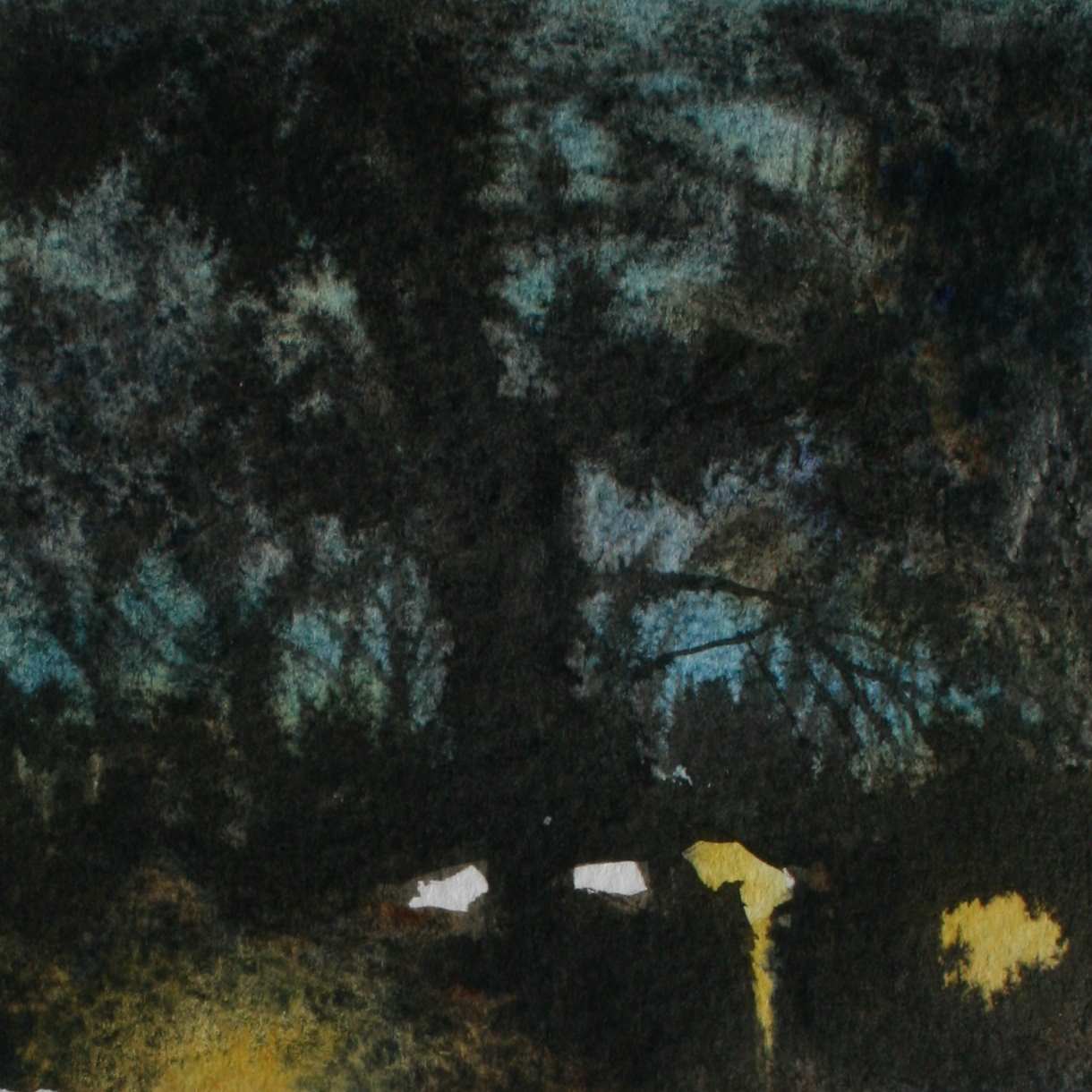
LAST LIGHT OF THE DAY 
I have used pieces of paper to mask areas of the plate here.

There is a magical mix of planning and spontaneity with monotype printmaking.

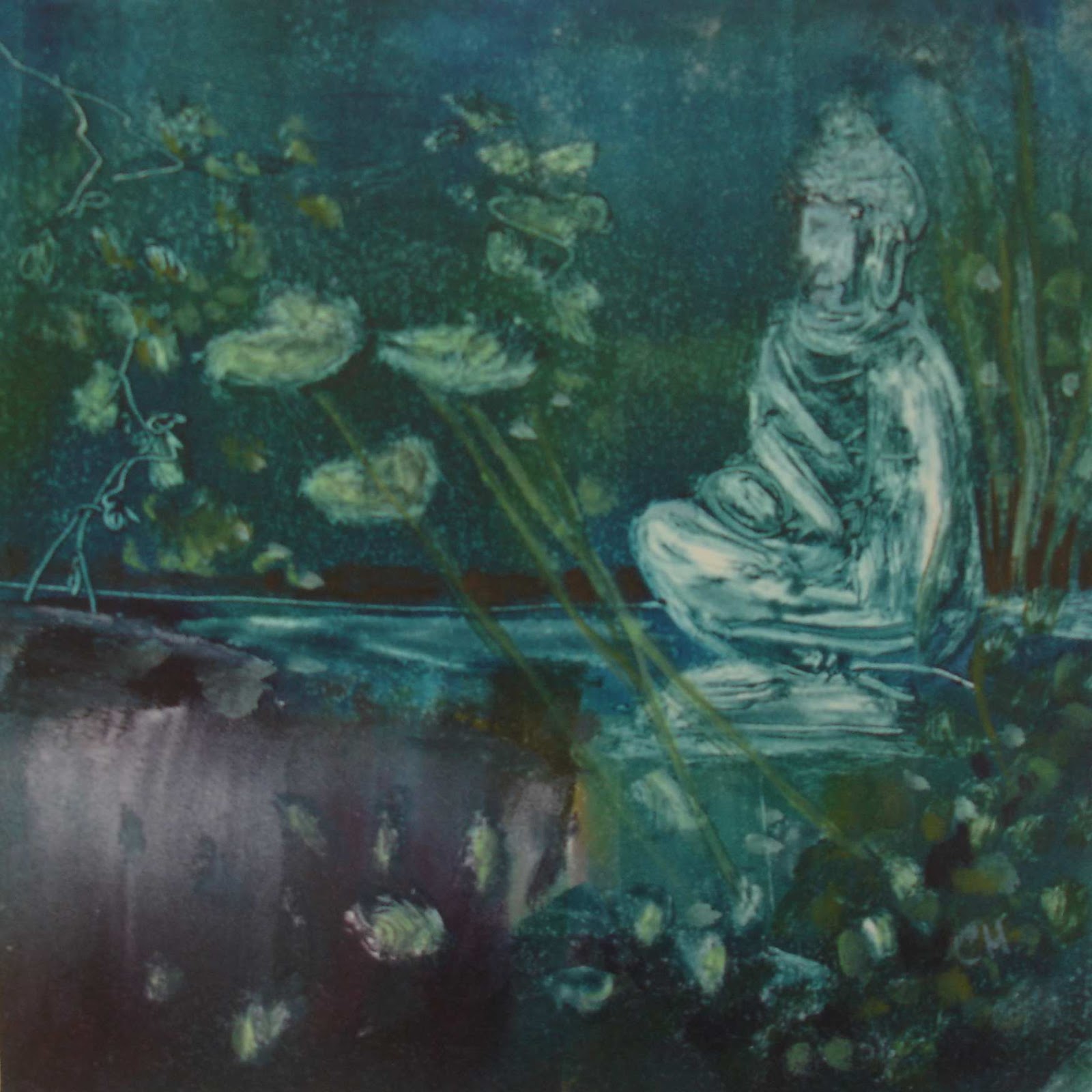
Smudging  the ink around can give atmospheric effects

BUDDHA BY THE POND

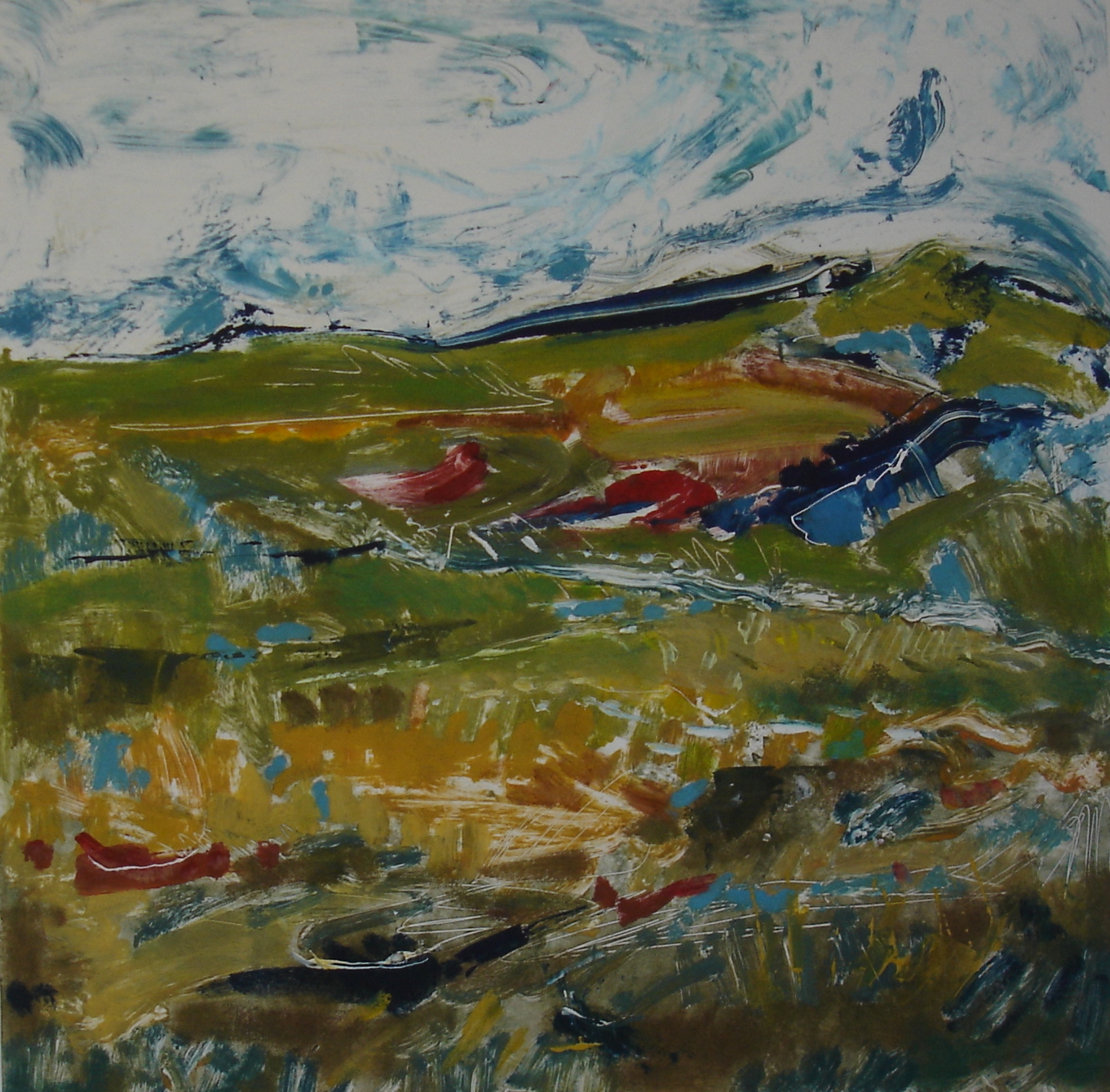
Using roller, brush and even fingers to apply ink and wiping ink from the plate with toothpicks, cotton buds, and cloth the gives great variety of marks


BLUSTERY DAY

Its a good idea to sit down and think about what you are trying to achieve before you start - what layers need to go down first - how are you going to blend or mask colours etc. It can save a lot of paper! 
Once you have pulled that first print have a careful look at the plate before you wash it all away - sometimes the ghost print (printing what's left of the ink on the plate) can be very interesting and form the basis of a mixed media piece - adding drawing, collage paint/ink to the print.


Friday, 29 January 2016

Abstract passion - "Each painting paves the way for the next painting" (Robert Wilson)

Hello
Its been a while since I posted but I have been busy working towards an exhibition in March and an exciting project which I am hoping will come off. My work has taken an abstract turn the last few months - and I have  been really enjoying this. I can see the tree studies I have been doing feeding into this work. "Each painting paves the way for the next painting" a quote from the video (link below)

Here is  a large painting recently completed as yet untitled.


At the end of this post is a link to a short filmed interview with Robert Wilson- worth a look if you only listen to the first 30 seconds! 


Here are a few more


I am trying to respond to basic mark making and my love of colour and not let anything else interfere - which is harder than it looks. I wonder how many images are stored on the hard drive of my brain - a staggering number I should think. Consider how many films where you can remember exactly what happens next, or the story line - that means that your brain has stored all those individual frames somewhere - let alone the images from every day of your life! Well these images from the semi and subconscious mind filter through and in my case often try to turn the painting figurative. I have to catch them "No, I don't want to make it look like a tree this time!" 


Click here for the Robert Wilson Interview 

Monday, 14 December 2015

Simple Pleasures - Drawing with Crayons

Recently I have rediscovered the simple pleasure of drawing with crayons......here are a few of my little tree studies (up to about 45 now).....


In fact it was earlier in the year when I did some drawings based on photographs I remembered how much I enjoyed it - though it is definitely a particular mind state -  the combination of really careful observation, focused attention, shutting out everything else - being able to rub out (phew!) and all those yummy colours in my crayon tin! Heaven.

 Small Feather, Blue Stones


It brought back so many memories ranging from story-board "snowman" type cartoons I did on my graphic design course to copying by sight and colouring endless Disney characters when I was about eight years old.  I have a vivid memory of being really pleased with my Lady and the Tramp dogs! Then I remembered an entire set of characters I drew as the basis of a book when I was about twelve......

I took my kids to the Derwent Pencil Museum in Keswick when they were younger - a museum all about pencils and crayons - with history dating back to 1500. It was very interesting even for those not in love with all those tins and colours. I was treated to a luxury set of 72 colours - and now I am really beginning to appreciate them.
Unfortunately they seem to have been affected by the recent bad flooding in Cumbria and are closed for refurbishment but I am hopeful you can still buy online.
Here is the link 

Sunday, 6 December 2015

Drawing as an expression of feeling

I have re-connected to some work I did last year - it was a series of large drawings done with a big brush and black paint, one on every day for a month. The drawings had one criteria - to move the brush as an expression of feeling. I then selected elements of these drawings to make a series of collagraph prints. Some of which are shown here.....


 The prints also led to some paintings - here is one example 


Sunday, 29 November 2015

Studio Life - plus RA insights

It's so interesting to see artists studios - they are like maps of character and unique creative neural pathways rolled into one. How studios are arranged or not arranged, what's on the wall or not on the wall, tidy or messy (and why?) is it full of colour or monochrome? It's fascinating. I admit I am extremely nosy when it comes to studios. Treasure troves.

Then there is another layer of individuality - does work come in a rush or over a long period, does the artist like to be solitary or gregarious. Music or silence? The RA are doing an interesting series about RA artists studios - see the link at the end of this post.

I feel fortunate to have a space I can leave in a ready-to-work state. Every now and again I have a big clear up - especially if I have come to the end of a series of paintings or prints. My choice is to have nothing on the walls if I can. I have one area of wall acting as a sketch book where I pin things that I want to remember, investigate or pick up at a later date. I often play music on repeat if it helps me to maintain the state of mind that I am after.

In the middle of a painting - paints are out and a clear patch at the far end of table for drawing
GOLDFISH BOWL SYNDROME?
Just as goldfish grow to be a size that is compatible to the size of their environment, I know that if I had three times the space I would easily fill it and my work would get bigger. It's an interesting thought. Do I let the size of my studio determine what I make? 

I had a chance to take quick pictures of the studios of some of the very talented artists in my building. Here they are..... and you can check out their websites too.


Ceramic Artist Debbie Bent click here for her website
 Textile Artist Amanda Bloom click here for her website
Painter Cathy Smale click here for her website


Here is a link to a great series about studios that the RA are doing. Slightly envious of the space!! 
CLICK HERE


Monday, 23 November 2015

Monotype Transfer Printing


This simple method of printing which can be done without a press, can give stunning and characterful results, you can do this at the kitchen table.

You will need
  • Printing ink (oil based) I use Caligo Safewash Etching Ink which is brilliant as it can be cleaned up with soap and water and washes out of clothes.
  • A plate to ink up (smaller than the paper you are going to be using). This can be made of a thin sheet of rigid plastic, rhenalon, perspex or even the stiff paper of a glossy magazine cover.
  • Some paper (simple A4 printing paper with suffice at the start) It can't be too thick.
  • Something to roll the ink out onto (I use an old wall tile) but you could use the front of an old glossy magazine 
  • A roller (mine is an inexpensive hard rubber roller found in craft stores)
  • Various type of pencil soft and hard, sharpened or blunt
Before you start it's important to remember that printmaking takes practice - there are lots of contributing factors - the paper you use, the ink, how the ink is rolled out, the temperature of the room, the type of lines you draw. Treat your first attempts as practice and a chance to learn what's what. 
REMEMBER YOUR PRINT WILL BE MIRROR IMAGE TO YOUR PENCIL DRAWING
You can draw portraits, patterns, landscape - anything you want - its up to you
Try using different pressure for light and dark tones, using lines in one direction only, cross hatch and so on


A little too much ink on the plate here - I have had to draw into it to get back some subtlety

This one is successful I think because there is lovely contrast in tone and spontaneity in the drawing
I love the soft lines reminiscent of dry point, and the random imprint from the plate - it all adds to the character and atmosphere of the drawing
Just experiment with lines and patterns, light dark and mid tones (varying pressure with the pencil)
These are some done at a recent drop in workshop with coloured ink


Here is a link to a very basic video tutorial

https://youtu.be/cD6JMgSimkc

And here are written instructions to refer back to
Roll out the Ink
Place a very small quantity of printing ink onto your wall tile. The aim now is to cover the roller with an even layer of ink and you do this by repeatedly rolling into the ink, lifting your roller each time so that it spins round (this ensures an even coating).

Ink up your plate
Place your plate on a sheet of newspaper and using the inky roller cover the plate with an even coat of ink. This time don't let the roller  spin round too much and change the direction you roll in every now and then. The ink should be very thin, but even. It helps if your plate is transparent because then you can hold it up to the light to check it.

Draw Your Image
Remember your printed image will be mirror image to the one that you draw.
When the plate is ready move it to a clean surface PICK IT UP BY THE EDGES ONLY to avoid fingerprints and place it INKY SIDE UP.
Place your sheet of paper on top of the plate. Try to place it so that the plate is central to the paper.
DON'T SMOOTH IT DOWN (surprising how many people instinctively do this) AND AVOID TOUCHING THE SURFACE OF THE PAPER  WHILST DRAWING (to avoid transferring fingerprints onto your drawing) How may times have I done this? LOADS! 

Feel carefully for the corners of your plate and mark them with a small dot so that you know where to draw your image.

Now draw your image - you can experiment with hard and soft pencils and different density of marks. Your drawing can be spontaneous or carefully planned and traced out.

Pull the Print
When you have finished your drawing hold the plate carefully with your finger in one corner and pull the paper off the plate from the diagonally opposite corner . You can have sneak peak like this as long as you are holding the plate steady and you can put the paper back down to draw onto again if you are unhappy with any areas of the print.